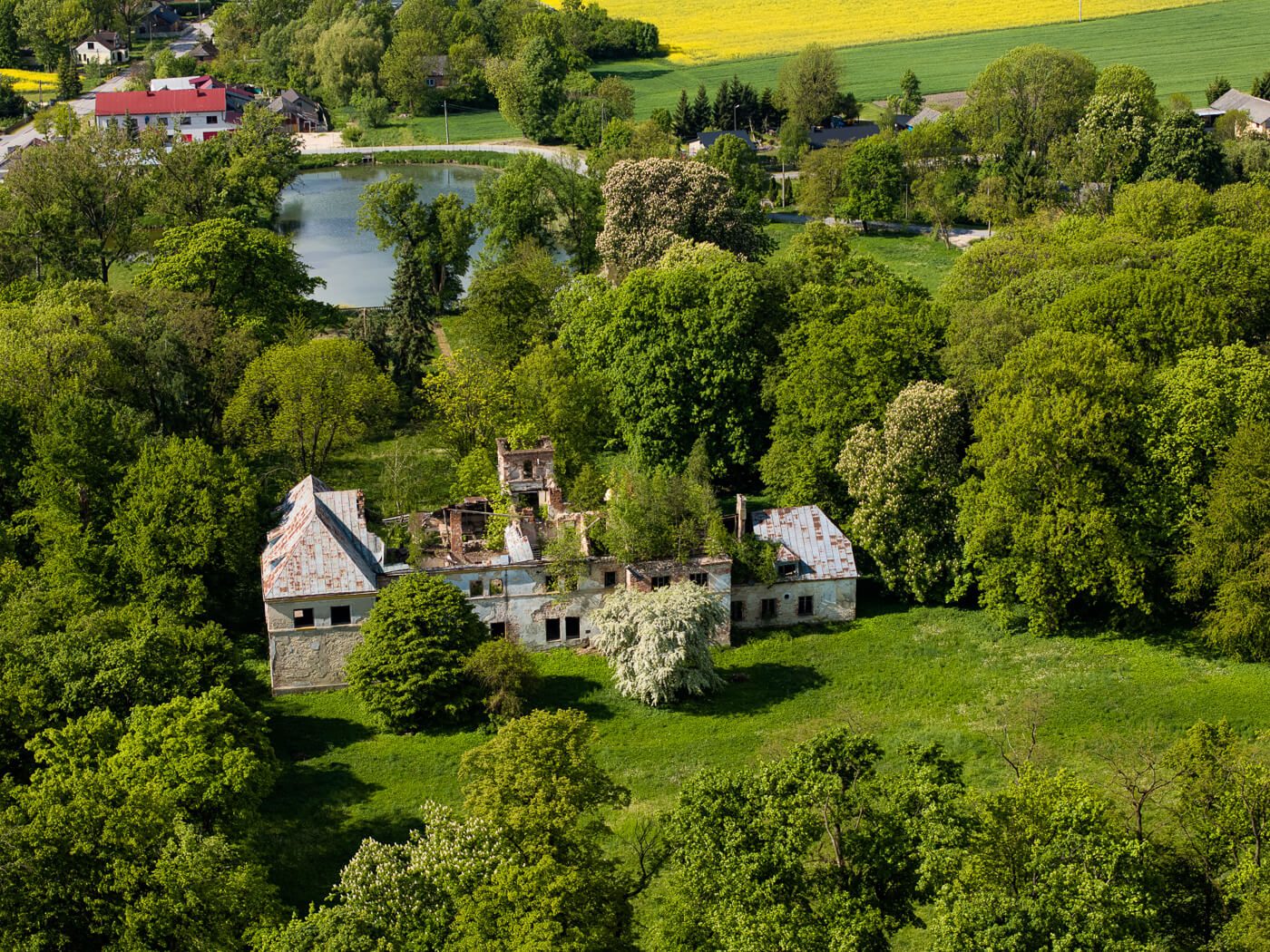
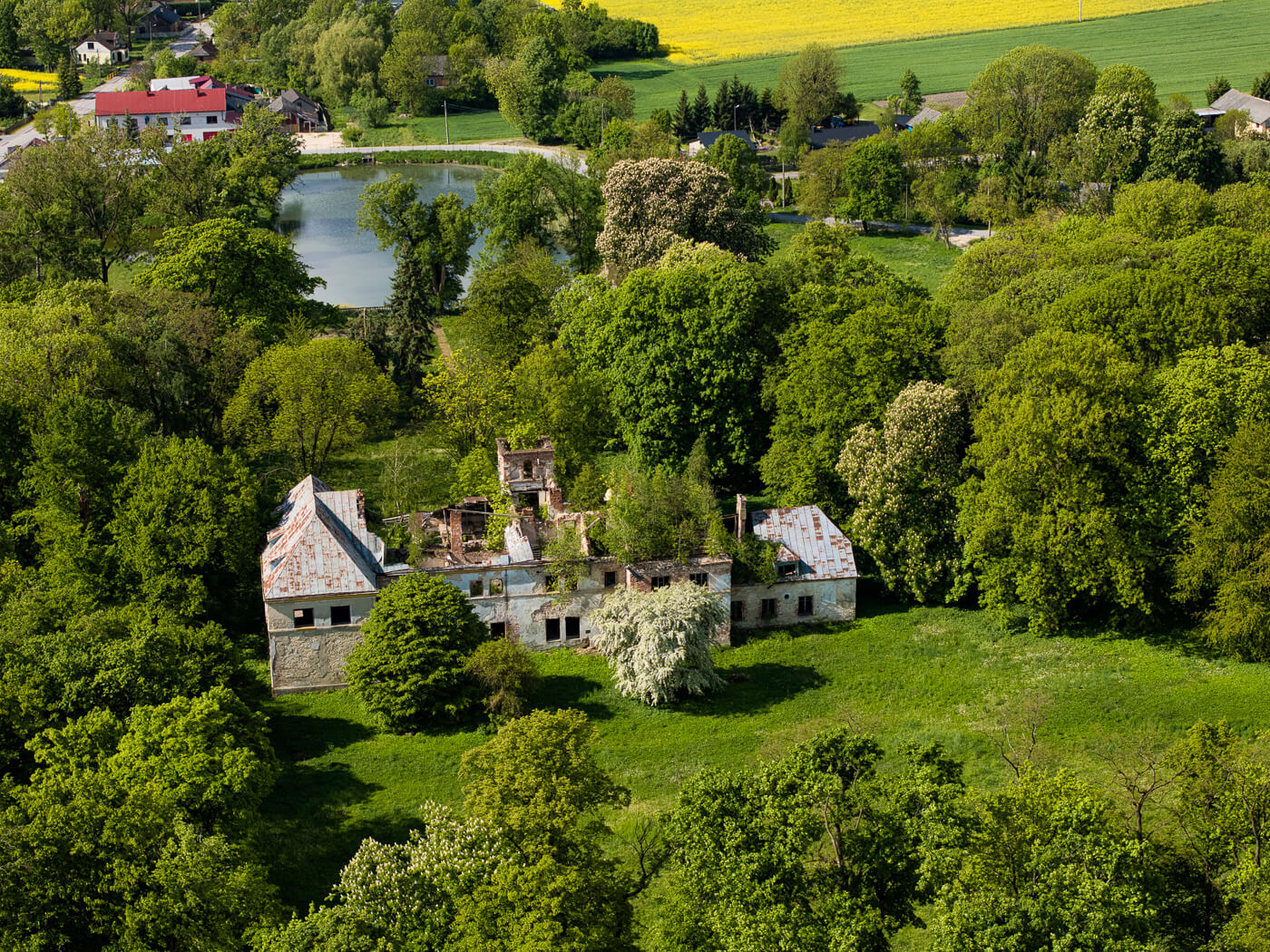
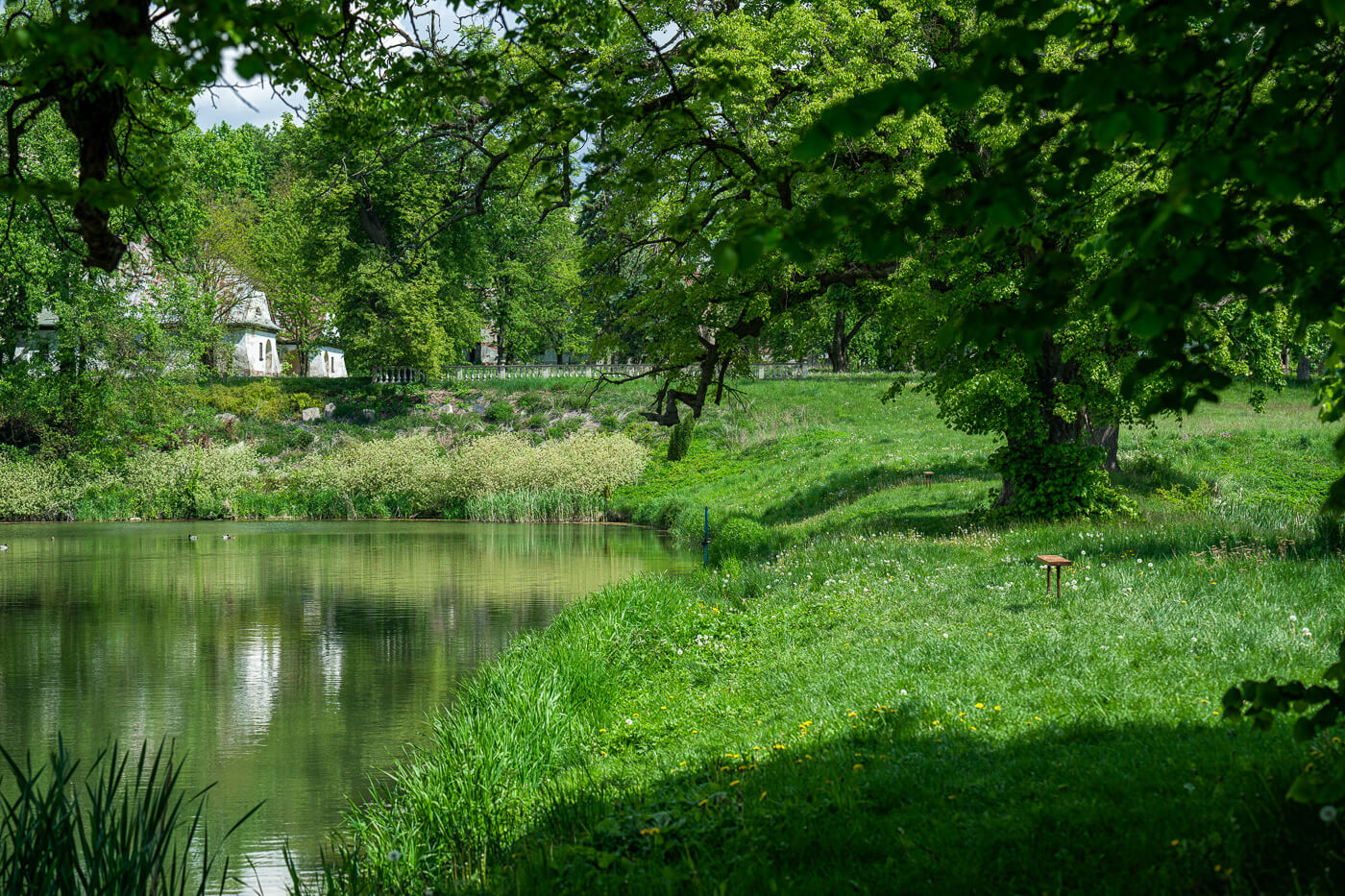
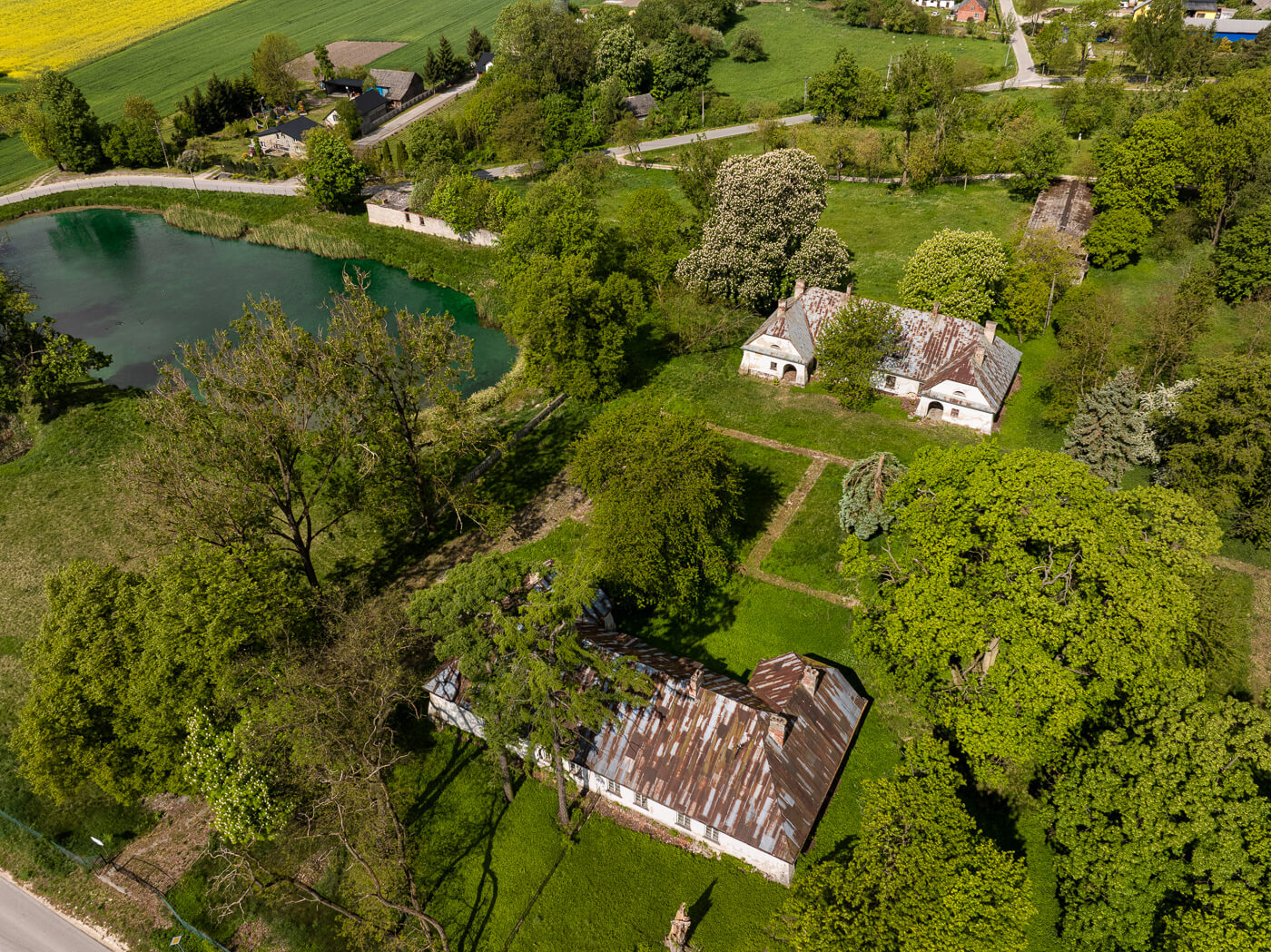
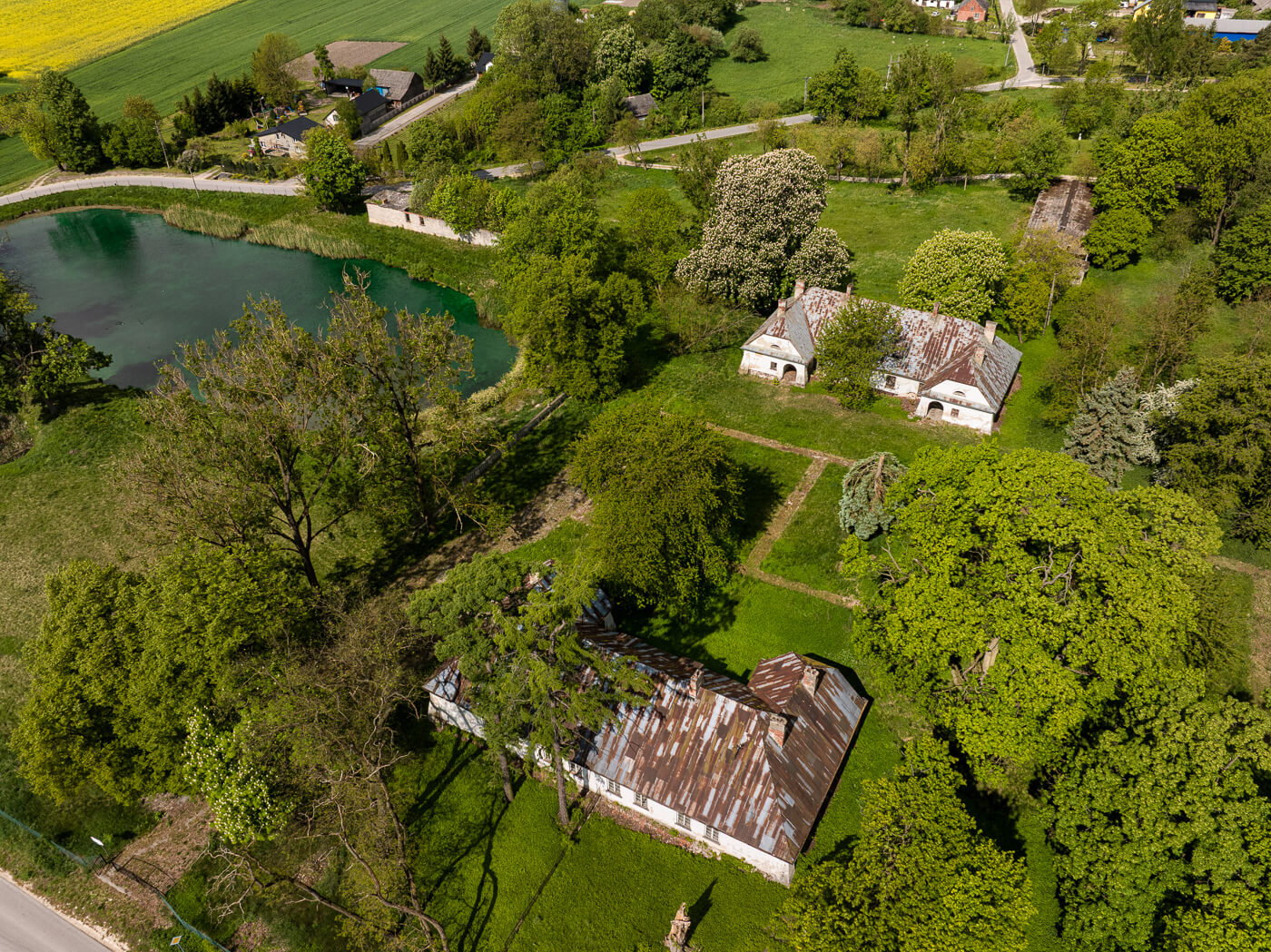
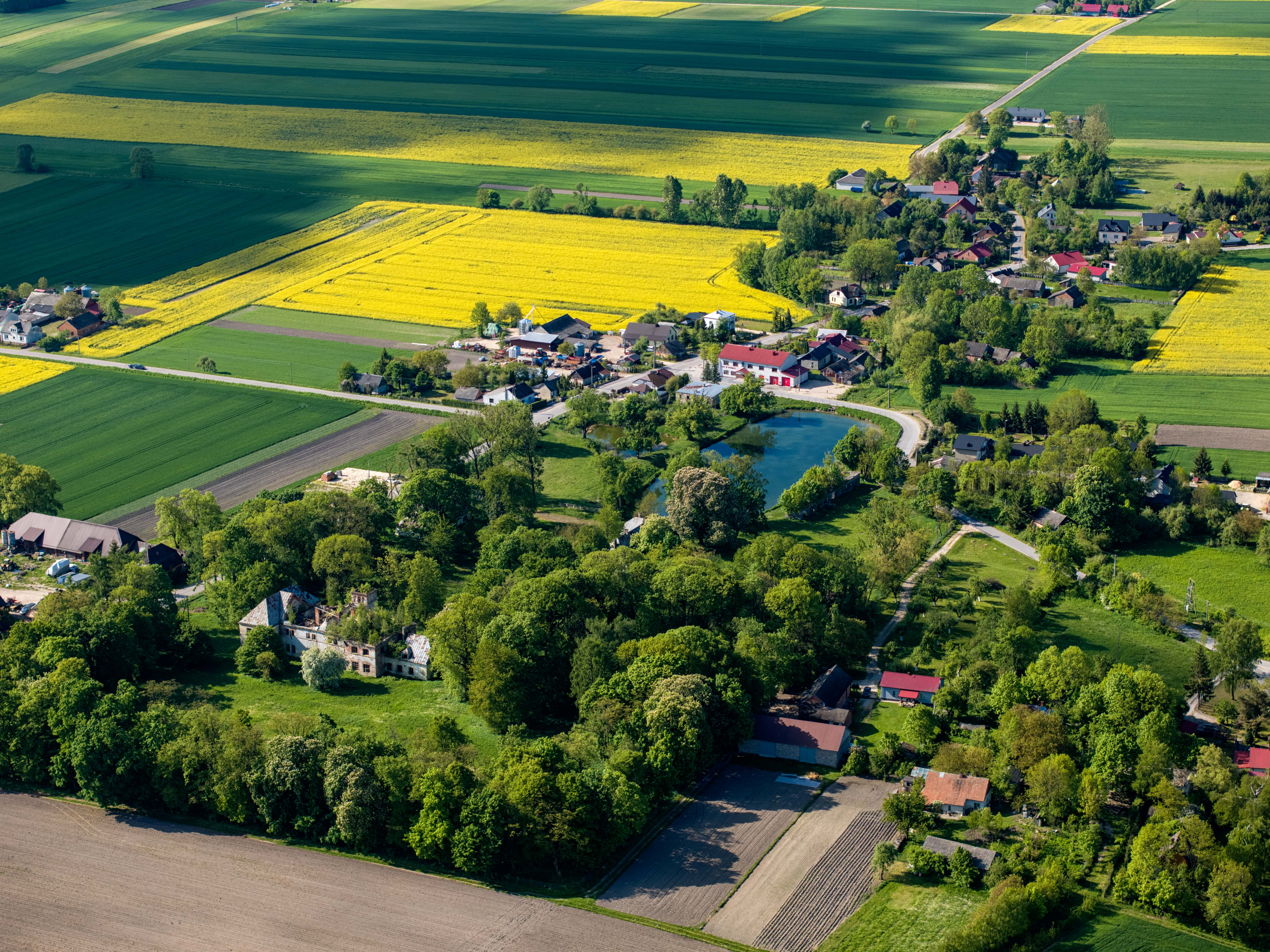
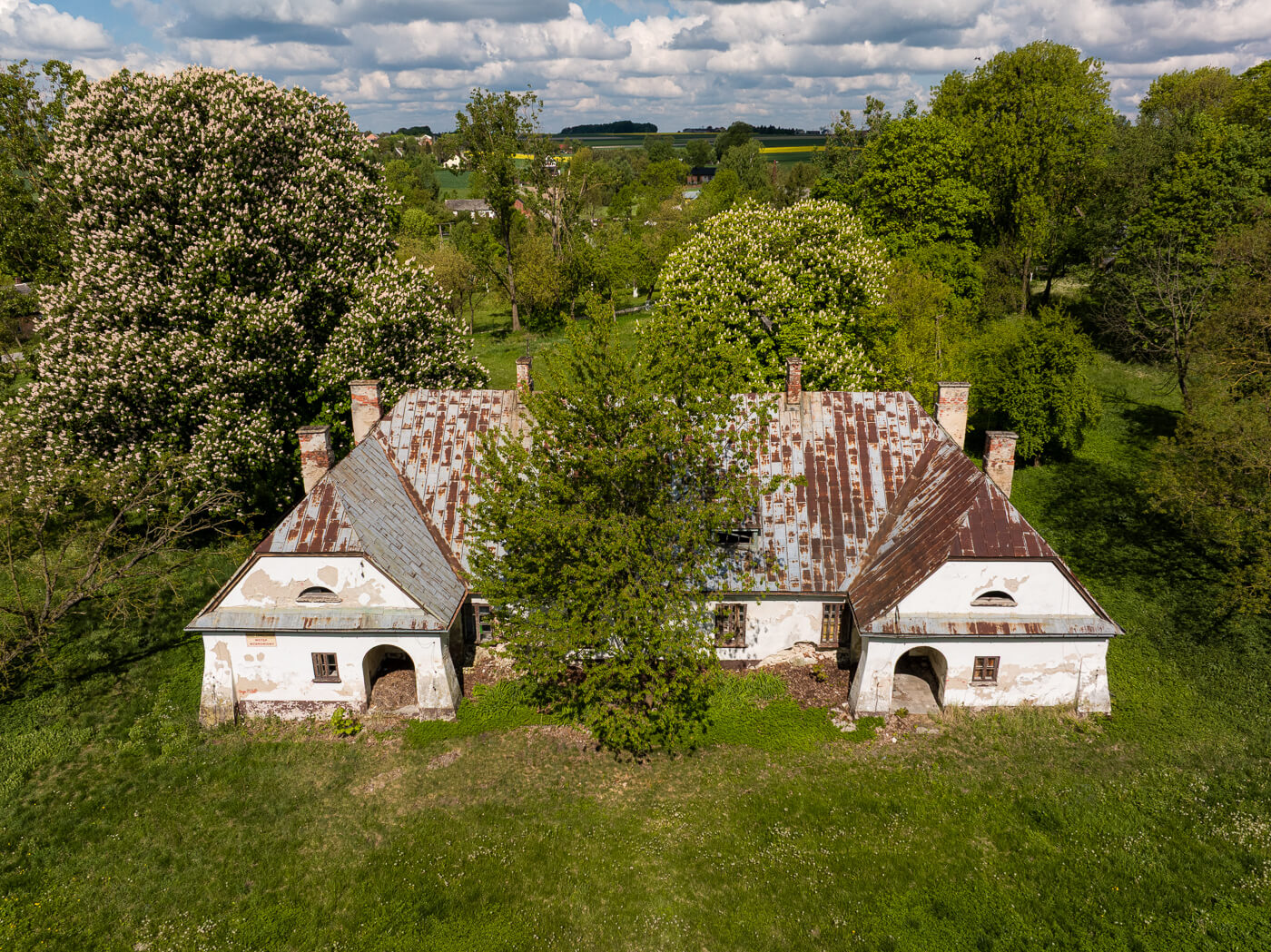
Rożnica is a charming village located in Jędrzejów County, within the Świętokrzyskie Voivodeship. Its unique character is undoubtedly highlighted by a vast historic park, where many beautiful specimens of the old tree stand have been preserved to this day. The park, together with its buildings, once served as the cultural and educational center of the region.
1900 – Establishment of the Palace
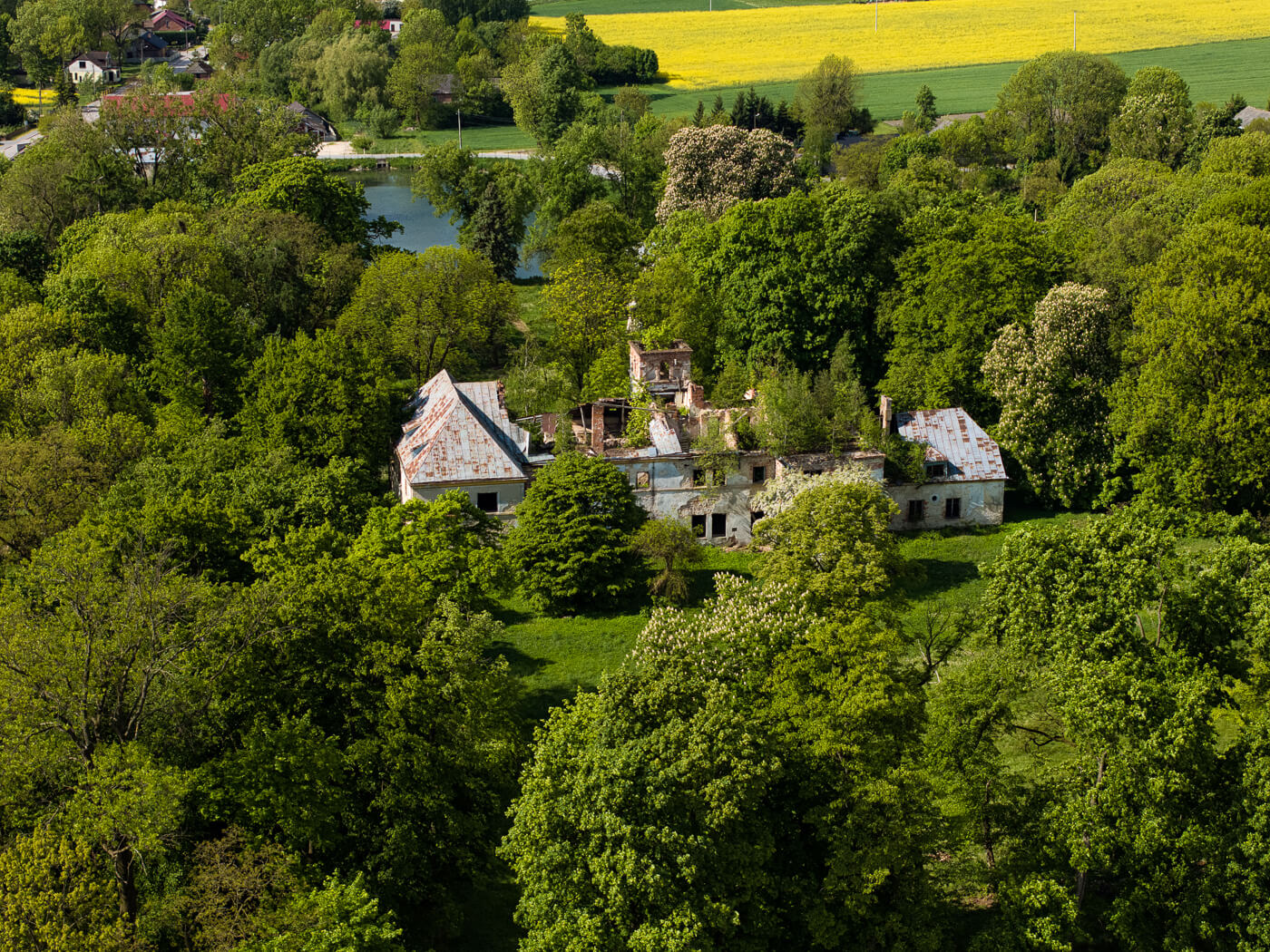
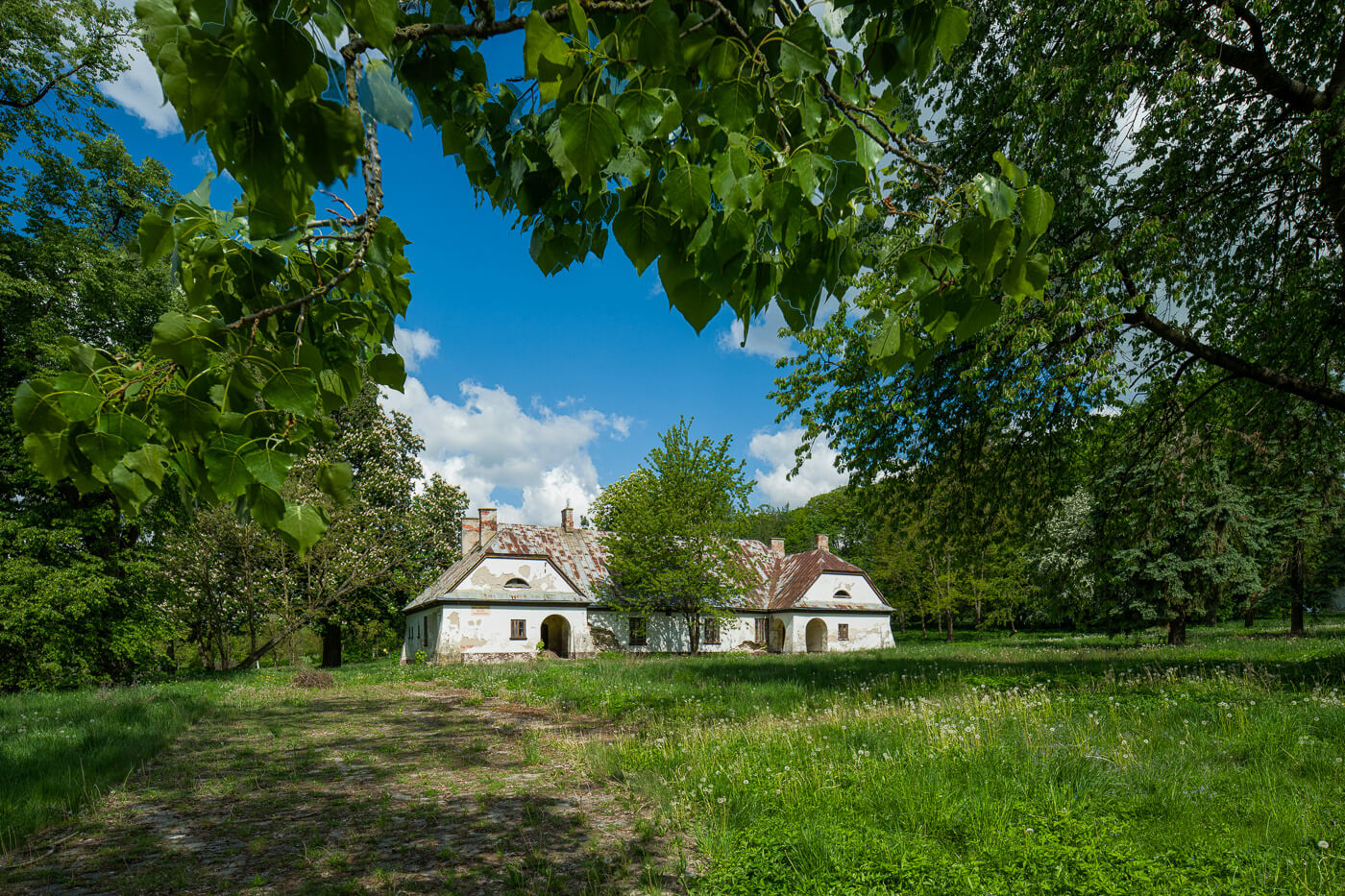
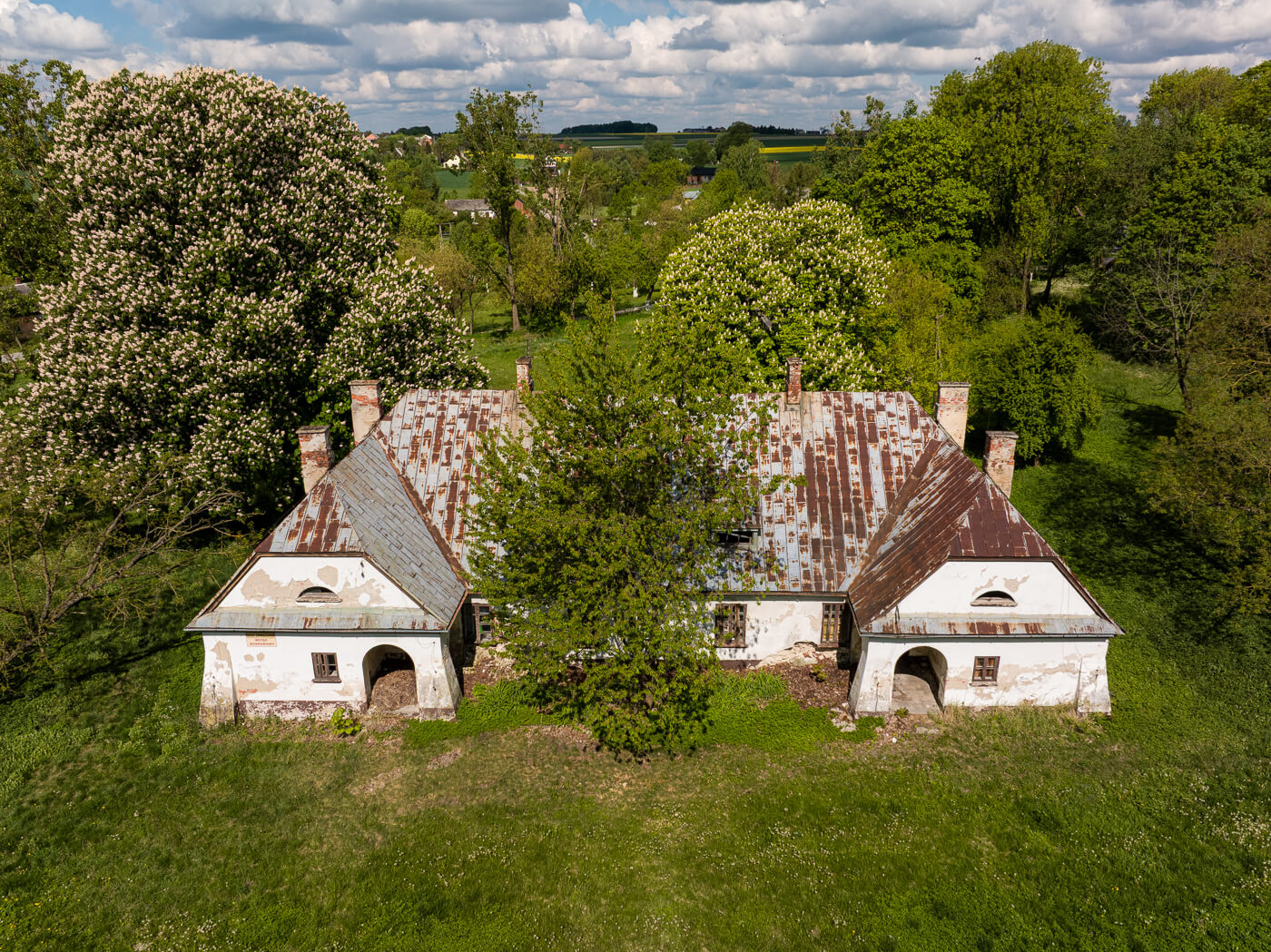
The Palace in Rożnica was built in 1900, and a dozen or so years later, two outbuildings were erected nearby. According to available sources, the palace had 43 rooms. In a preserved note by an unknown author, who described it in an exceptionally picturesque way, we read: “…a two-story building with a mansard roof in the French style, covered with shingles, featuring a chapel, a ballroom, and three terraces. On the ground floor, there is a beautiful hexagonal hall, with doors on each wall leading to the dining room, salons, study, and office. Beautiful stuccoes, expensive wallpapers, marble fireplaces, and floors made of multicolored wood.” This is how the building was described in 1906.
From that moment, its history unfolded in a turbulent manner. The institutions managing and using the property changed from time to time. Originally, the palace complex was spread on both sides of the road, with the palace itself built on the eastern part of the estate.
1920s and 1930s – Agricultural School
During the interwar period, the State Agricultural School was located here.
1939–1945 – World War II
During World War II, the estate remained under German administration.
1945–1975 – The Golden Age of Education
At the turn of the 1940s and 1950s, the property was divided, and on the plot where the palace complex now stands, the People’s University of the Kielce Land was established. The palace and park were used continuously by the university until 1975-a period that can undoubtedly be considered the most significant in its history.
Thanks to the great dedication of an exceptional man, Waldemar Babinicz, first the Cultural and Educational High School was established, and then, in 1958, the People’s University of the Kielce Land. Situated in a small village, the palace became a center for educating graduates sensitive to the changes taking place in the world-well-rounded people of culture.
1975 – Barracks and OHP
In 1975, the property was transferred to the Directorate of Regional State Railways to serve as barracks for soldiers building the Metallurgical-Sulfur Line and to house the Volunteer Labor Corps.
1985–2000 – Time of Forgetting
In 1985, the facility came under the authority of the municipality, which, a year later, allocated part of the property-the outbuilding-for use by the Primary School. The remaining part was left unused and gradually fell into disrepair. In 2000, the destruction was completed by a fire that consumed the palace roof.
Currently – Hope for a new life
Nevertheless, the preserved outbuildings and palace walls continue to highlight the unique character of this place, inspiring confidence that an investor will emerge who recognizes its potential, restores its former glory, and carries forward its legacy. The property is currently privately owned.